Should you date-stamp your corporate website in the age of AI search?
Georgia Barrett | 26 Aug 2026
AI-powered search has resurrected an old quandary for corporate digital managers: when and where should companies put a "last updated" date-stamp on their web pages?
Recency and freshness can influence the information AI systems surface. Microsoft's guidance in its Bing Webmaster Tools explicitly advises publishers to “keep content fresh and accurate”, as “regular updates help ensure AI systems reference the most current version of your content.”
Date-stamping is really a governance question
But that doesn’t mean simply publishing more content – maintaining and updating existing pages matters too.
The question for corporate digital managers boils down to governance. It is not just a case of “should we date-stamp our pages?”. Winning in AI search means deciding which pages should have dates, and whether your organisation has the ability to be consistent and keep date-stamps current and accurate.
Date-stamping is really a governance question.
While recency has its GEO advantages, a few words of warning. Changing a date without changing the content on the page risks turning the date into an unreliable signal for LLMs, rather than a useful one.
Google warns against updating content for the sake of freshness. It should be a “significant” update.
Consistency also matters. Conflicting facts across corporate websites, newsrooms and other authoritative channels can make it harder for AI systems (and human users) to determine which version is the most current.
Corporate digital teams therefore need clear guidelines. Determine internally what counts as a meaningful update; how often important pages should be reviewed; if the visible date agrees with the underlying structured data; when old content should be updated, archived, or removed; and who owns the accuracy of the page.
This is even more important for large, complex corporate digital estates, where content is owned by investor relations, media relations, public affairs, sustainability teams, careers and other functions.
“And the hottest skill in digital comms right now isn't prompt engineering. It's consistent, well-governed, optimised content about your brand across every channel that feeds the models shaping your reputation. Starting with the mothership: your website.”
- Christina Ruby, Shell
What should corporate communicators do?
1. Date-stamp content where recency is important
Consider stating the date range, or adding “published”, “last updated” or “last reviewed” dates for important pages where information changes frequently, including:
Press releases: news items, articles and blogs should already have dates, but ensure they’re also baked into the schema and structured data.
Quarterly results and other timely financial information
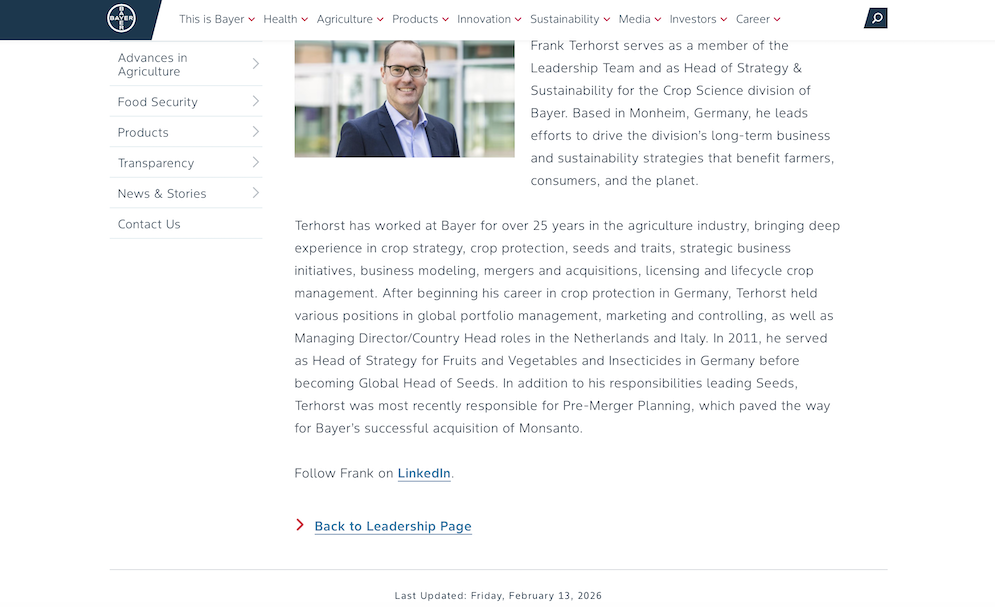
Leadership pages: See Bayer as an example of including “last updated” stamps on leadership biography pages.
Bayer: Date stamps on leadership biographies
ESG and sustainability reporting pages: Mondelez’s non-financial data tables are explicitly labelled as covering the annual reporting period of the stated year.
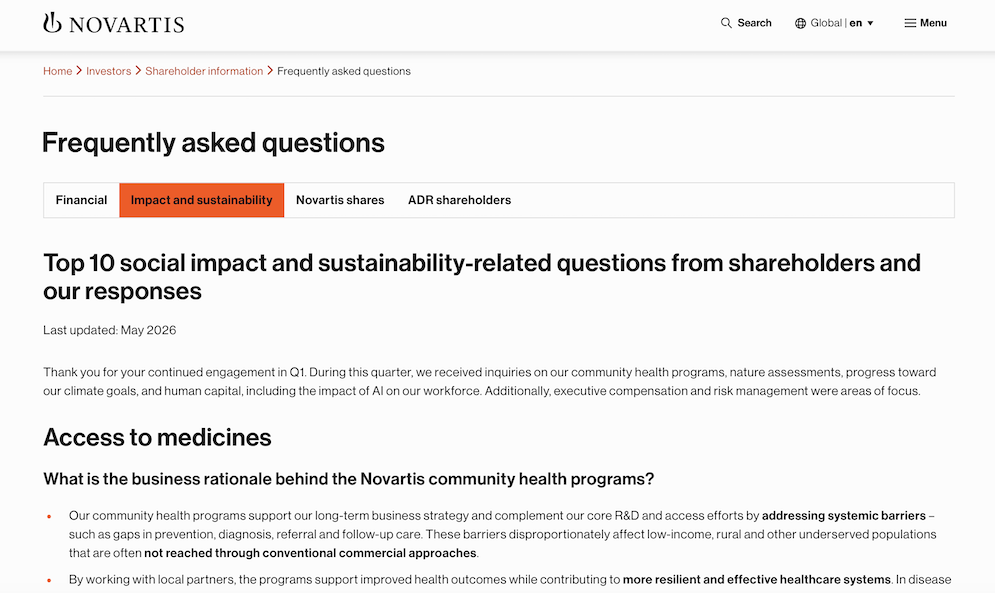
FAQ pages on topical issues: Novartis’ shareholder sustainability FAQ has a “last updated” tag.
Novartis: Date-stamping sustainability related FAQs for shareholders
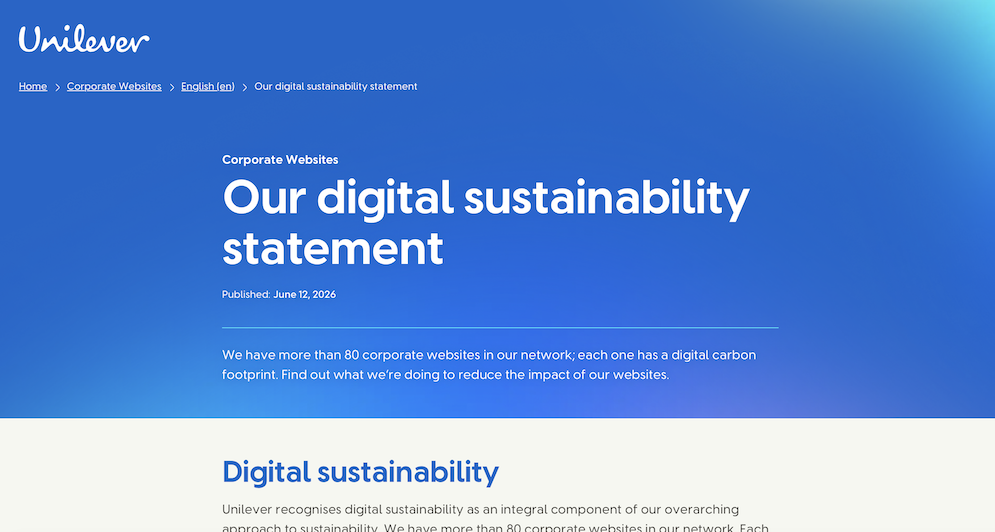
Policy pages: Accessibility, privacy and legal pages are strong candidates for date stamps, as demonstrated by Unilever.
Unilever: Including "Published" dates on statements and policies
Priority explainer content and strategy pages: See Amazon’s explainer on what Amazon Business is as an example.
2. Don’t necessarily date-stamp everything
Date-stamping everything can quickly make the whole site look stale if governance protocols slip. So focusing on a small set of key pages first is a pragmatic approach.
Be selective: prioritise pages and topics where the company’s reputation would be the most at risk if its version of the facts isn’t seen.
Differentiate between:
Published: when was this created?
Last updated: when did its substance materially change?
Last reviewed: when did somebody verify that it remains accurate?
3. Use this as an opportunity to spring clean
“Take a chance to clean out any content that may be a little bit outdated. Relevance is key.”
- Neil Jordaan, Bayer
AI search gives corporate digital teams another reason to tackle outdated content, which could pose a reputation risk if it is surfaced by AI systems.
That said, don’t delete all old content in pursuit of freshness. Corporate history, archival reports, press releases and older research are still valuable. The best approach is to make their historical context clear.
Google’s guidance warns against duplication, which could be a guiding principle when retiring older content: “having duplicate content can be a bad user experience and search engines might waste crawling resources on URLs that you don't even care about. If you have time, try to reduce it.”
Corporate digital teams have spent years wrestling with ownership, duplication, and sprawling estates. AI hasn’t made those problems disappear. Rather, it has increased the reputational cost of getting them wrong.
Key takeaways
Don’t date-stamp every page. Prioritise content where outdated information could create reputational, financial or stakeholder risk.
Use the right date signal. Distinguish between published, last updated, last reviewed and, where relevant, the reporting period or effective date.
Only change “last updated” after a meaningful change. Avoid refreshing timestamps simply to make old content appear new.
Make dates consistent. Visible dates and dates in structured data should agree.
Assign ownership and a review cadence. A date-stamp is only useful if someone is responsible for keeping the underlying information accurate.
Prioritise time-sensitive corporate content. This may include financial information, leadership pages, sustainability data, topical FAQs, policies and key strategy or explainer pages.
Deal explicitly with old content. Update, archive, remove or clearly contextualise outdated pages rather than leaving ambiguous information online.
If you would like to learn more about how we can support you on your governance strategy, AI visibility or any other aspect of your corporate digital communications, please reach out to Tom Golden