Are you losing the investor relations content battle?

For decades, the Investors sections of many corporate websites have done little more than tick compliance boxes.
Quarterly results. Governance PDFs. Share price tools. Little else.
This approach has always underserved investors and analysts. But in the age of AI search, it’s now actively dangerous.
Why?
If you don’t provide rich, authoritative narrative information about your investment case, leadership and strategy, then tools like ChatGPT and Perplexity will fill in the gaps.
And they’ll do it using third-party content you don’t control.
The bottom line? If your story isn’t clear on your site, it will be rewritten elsewhere.
Here’s six lessons from world leaders on getting narrative online IR content right:
Explain the business behind the numbers
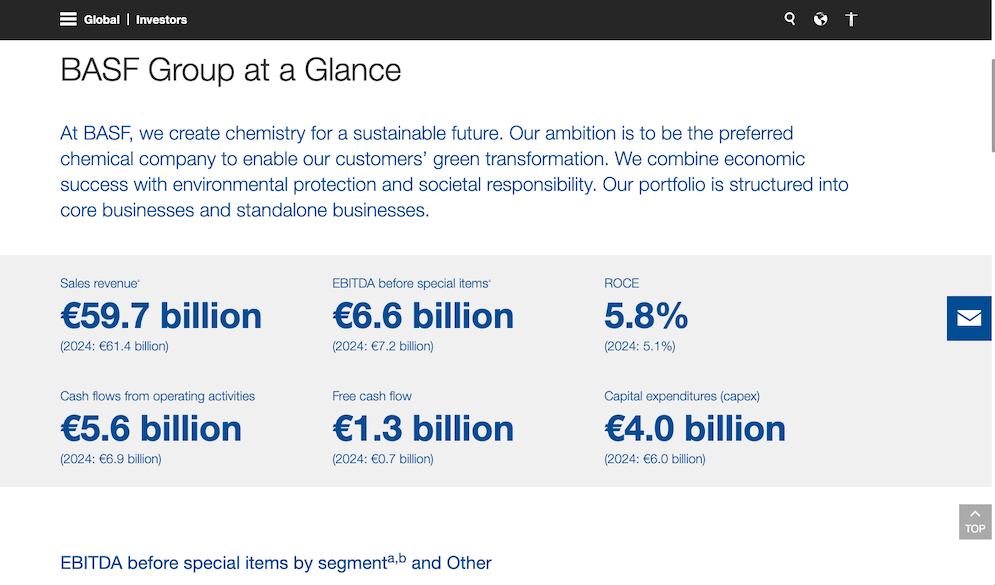
It’s surprising how many Investors sections have no qualitative overview of the company as an investment at all. BASF has long bucked this trend with a detailed “BASF Group at a Glance” subsection.
Charts and graphics make key points easy to digest by human visitors. Deep facts and figures on strategy, outlook and other topics position the resource to AI search bots as the definitive authority on the company’s investment case.
Drag quarterly results out of the PDF dungeon
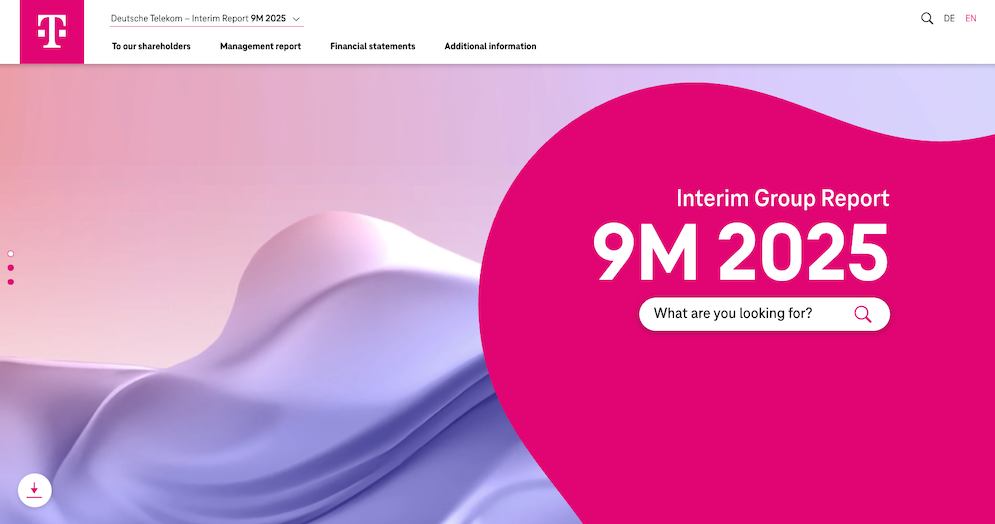
Deutsche Telekom has an innovative IR team that has long embraced the potential of digital channels to bring the investment story to life.
This shines through in the quarterly results section of the company’s website.
As well as the usual array of PDFs materials, there’s also Excel downloads – plus full-fledged HTML reports on quarterly performance. These contain detailed management reporting on the economic environment, risks and other topics, plus lots of facts and figures.
When an AI search bot goes hunting for the definite source of information to feed answers to questions about Deutsche Telekom’s performance, it will hit the jackpot here.
Give humans and AI bots a clear and compelling overview
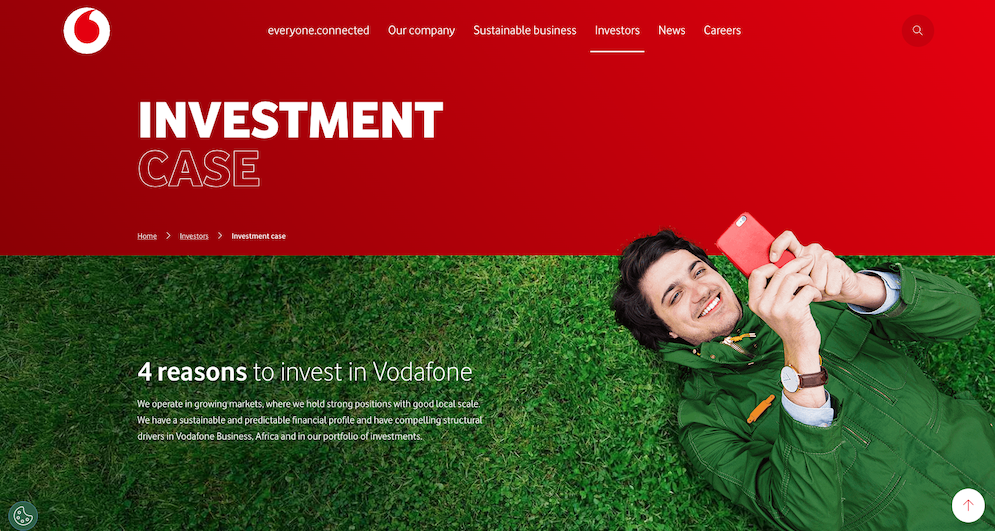
Vodafone’s corporate site has a tightly edited, elegantly designed Investment Case subsection, structured around “4 reasons to invest.”
Human visitors will appreciate the clear infographics, helpful maps and punchy pull-out facts.
AI bots will appreciate the rounded scope.
Both humans and machines will welcome the onward links to deeper “at a glance” material in the “Our company” section of the site, as well as to the “Performance and reports” area of the Investors section.
Put senior leadership in front of the camera
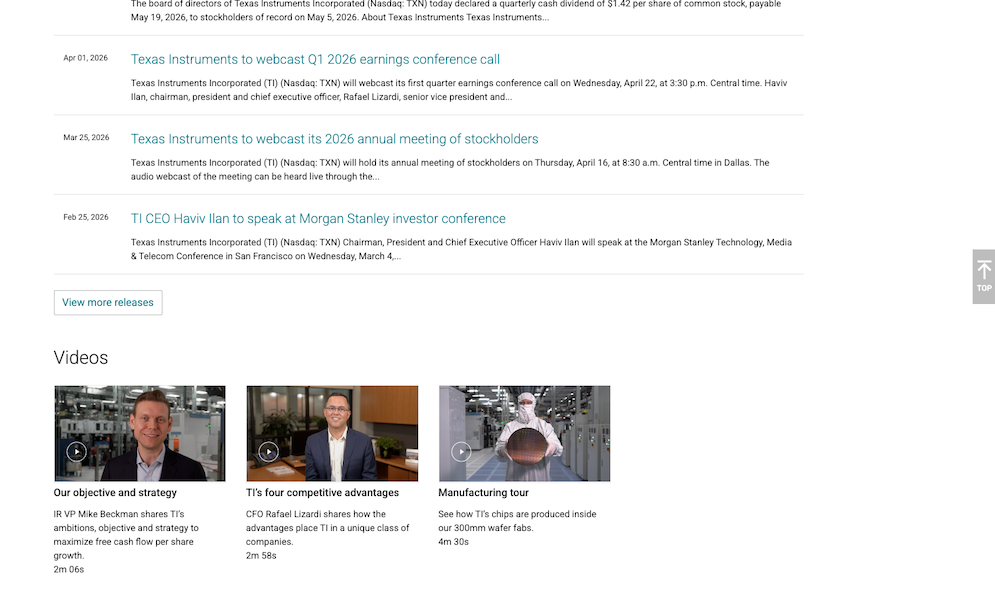
The Investor relations landing page of Texas Instruments’ website promotes videos featuring the head of IR and the CFO explaining the company’s “ambitions, objective and strategy” as well as its “competitive advantages”.
There’s also a video tour of a manufacturing plant.
The films are short and informative.
It’s an approach worth emulating – though Texas Instruments’ apparent failure to include professionally edited (rather than auto-generated) closed captions is a missed opportunity to maximise visibility of this video content in AI search answers.
Provide unique content
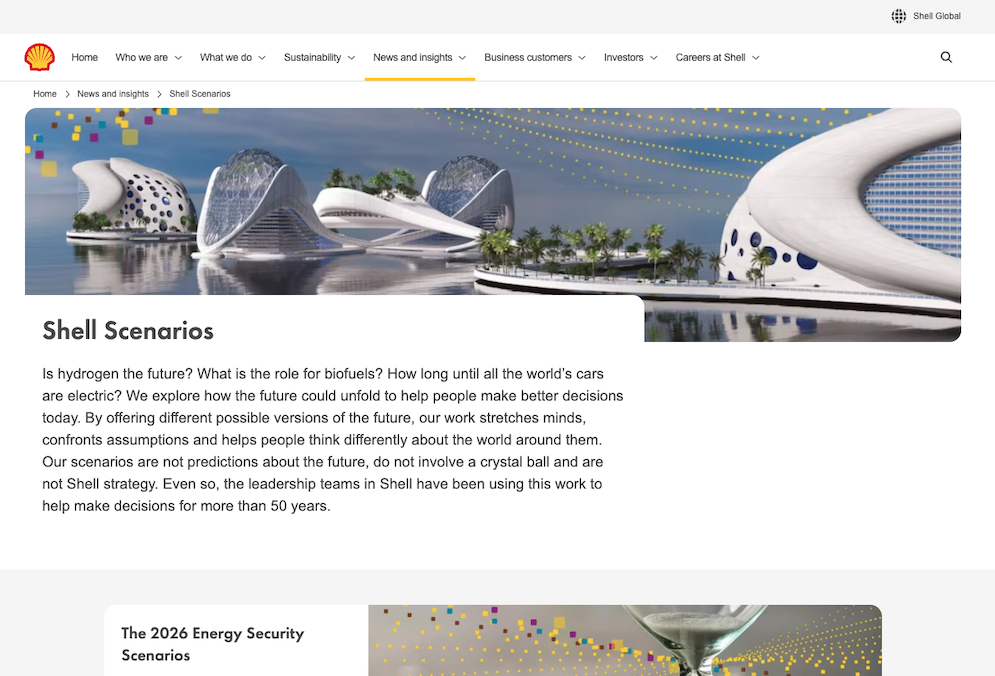
Shell has a “Scenarios” section of its global website that explores, in detail, major global trends and their potential future impact. Energy security is a particular focus.
Is this pure “investor relations” content? No. But it’s the kind of unique, distinctive, authoritative output that will win interest and trust in the investment community and beyond – both directly and via AI search.
Go local where it matters
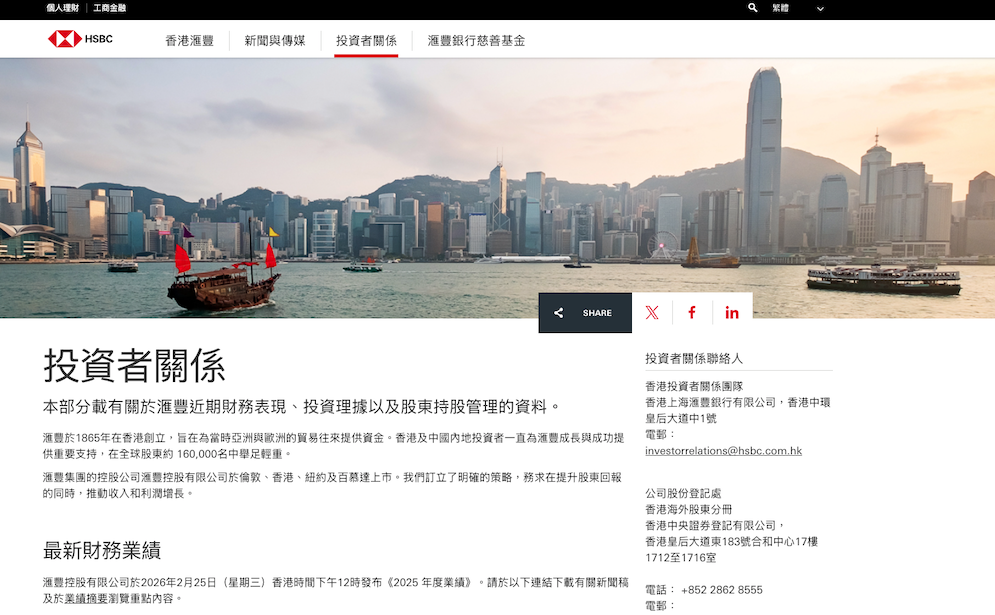
Most Investor relations sections are in English only. HSBC, which has a large Chinese-speaking investor base, has rich IR materials in Chinese, on its Hong Kong corporate site. Unusually, this is directly signposted in the Investors menu of the global site, HSBC.com.
As well as pleasing local investors, this approach also boosts the visibility of HSBC-owned content on DeepSeek and other AI search tools.
Three keys to success
- Own your narrative
If your site doesn’t explain your strategy clearly, AI will source it elsewhere. - Write for humans and machines
Structure, clarity and depth now serve two audiences. - Kill the PDF-first mindset
If it matters, it should live in HTML.
Subscribers can find more on this topic, including more inspiration on Serving Investors from the Best practice library, in the Bowen Craggs Hub (Login required. Find out more about our subscriptions)
If you would like to learn more about how we can support you on your investor relations, content strategy or any other aspect of your corporate digital communications strategy, please reach out to Tom Golden.