Andy Burnham, social media and the authenticity paradox

Andy Burnham's social media has been hard to miss since he became UK Prime Minister.
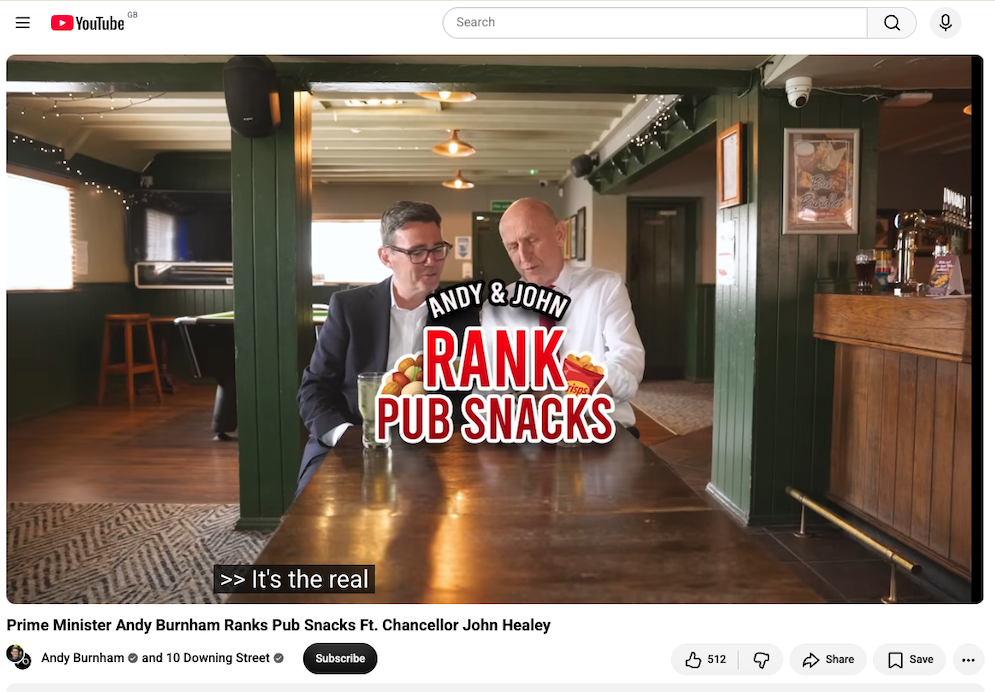
In the space of a few weeks we've seen him ranking pub snacks, talking about barm cakes, pulling pints and running with Mo Farah. Old footage of him DJing in Manchester has resurfaced too. For a generation raised on Boiler Room sets, having a DJ run the country may be the closest British politics has come to understanding the youth vote.
For the most part, it works. The content feels made for social media, and Burnham comes across as a recognisable person with interests and opinions beyond politics. It's a fairly dramatic departure from the way we're used to seeing prime ministers communicate.
But I've also found myself wondering how long it can keep feeling that way.
Burnham's team clearly understands what performs on social media. There have already been comparisons with Zohran Mamdani's approach in New York, and the informal filming, humour, collaborations and everyday settings make political communications feel less like political communications.
@ukgov Welcome @Andy Burnham ♬ A hot new bom shel enters the vila - Bella
Not all of it lands. A Love Island-inspired TikTok announcing Burnham's arrival at Number 10 with “a hot new bombshell has entered the villa” attracted plenty of attention, but also plenty of cringe. There is a fine line between understanding internet culture and looking like you want everyone to know you understand internet culture.
Use these techniques often enough and they start to become recognisable as techniques. And that's interesting for corporate communicators, because companies are trying to solve the same problem.
When we start to see the strategy
Corporate communicators have been talking about authenticity for years. Audiences are increasingly good at spotting how communications have been put together.
We know the supposedly spontaneous CEO video probably wasn't spontaneous. We know there are communications teams, content calendars, approvals and brand guidelines somewhere outside the frame.
None of that is necessarily a problem. Audiences don't expect the CEO of a multinational to be personally editing TikToks. The problem comes when we notice the performance before we notice the person.
There is now a recognisable language of “authentic” institutional social media: handheld camera, casual clothes, a mistake left in the edit, a meme reference, someone important walking while talking. Perhaps, if we're really pushing the boat out, an executive revealing their favourite biscuit.
Burnham uses plenty of these techniques, but a lot of the personality being presented is genuinely his. The DJ footage dates from his time as Mayor of Greater Manchester. Music, football and his northern identity haven't suddenly appeared since he got the top job.
That should make the content feel convincing. Mostly, it does. But package those characteristics often enough, and even something genuine can start to feel engineered.
Start with what is already there
For corporate teams, one lesson might be to look harder at what already exists inside the organisation.
@americanexpress Long before American Express introduced its Blue Box logo or the helmeted Centurion, the company relied on a different symbol of trust, security and powerful backing: a watchdog. Listen to our archivist, Ira, discuss the history of the watchdog and then take a deeper dive via the link in our bio.
♬ original sound - American Express
American Express has recently found an unlikely social media star in its own archives. Ira Galtman, its long-serving archivist, appears in videos telling stories from the company's 176-year history, from old artefacts to the stranger episodes in Amex's past.
It works because Amex hasn't invented a personality for him. It found an interesting person with access to something distinctive about the company and gave him room to talk about it.
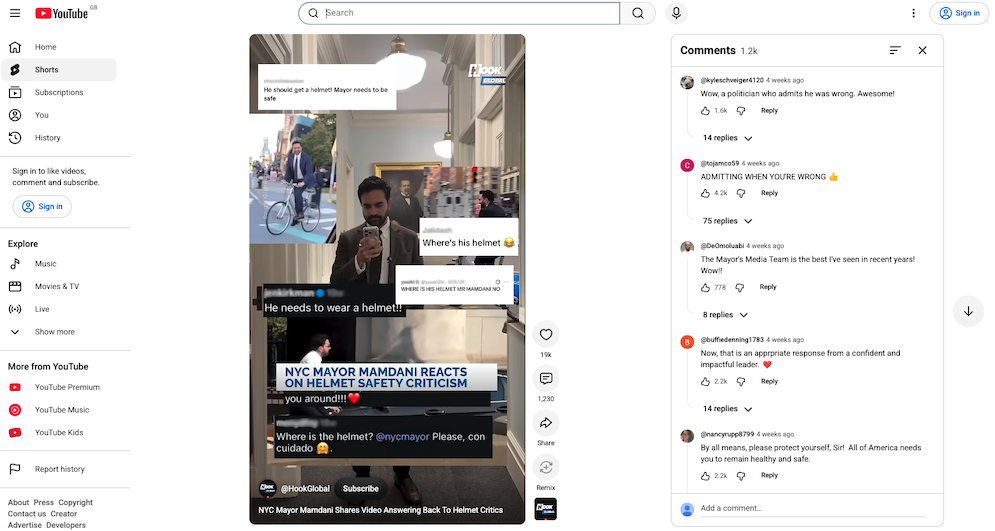
Mamdani offers another version of the same idea. After New Yorkers repeatedly commented on videos of him cycling without a helmet, he responded with a video showing him reading the comments, unboxing a helmet and putting it on.
It's a small thing, but a good example of social media actually being social. The audience helped shape what came next.
Corporate communications often works in the opposite direction. We start by asking what we want people to think about an organisation and construct the content accordingly.
It might be worth starting with what is already there instead. Who inside the organisation knows something genuinely interesting? What are customers asking about? What conversations are already happening?
The answer might not be the identity the organisation would have invented for itself. That's probably part of the point.
Don't give an interesting person a boring script
Of course, finding an interesting person is only useful if they remain interesting once the communications process begins.
An organisation identifies an executive because they're charismatic or an employee because they're an expert. Then the language gets polished. The anecdote gets shortened. The slightly opinionated bit disappears. Someone adds a corporate message. Someone else removes the joke.
By the time the content reaches LinkedIn, the interesting person somehow sounds exactly like everybody else at the company.
Companies need governance. But if you've chosen somebody to speak because they have an interesting perspective, enough of that perspective has to survive the process.
Make content for the platform
Finding the story is only half of it. The next question is where and how to tell it.
Different platforms have their own conventions, communities and reasons for being used. Burnham's team clearly understands this. A press release doesn't become TikTok content because somebody films it vertically.
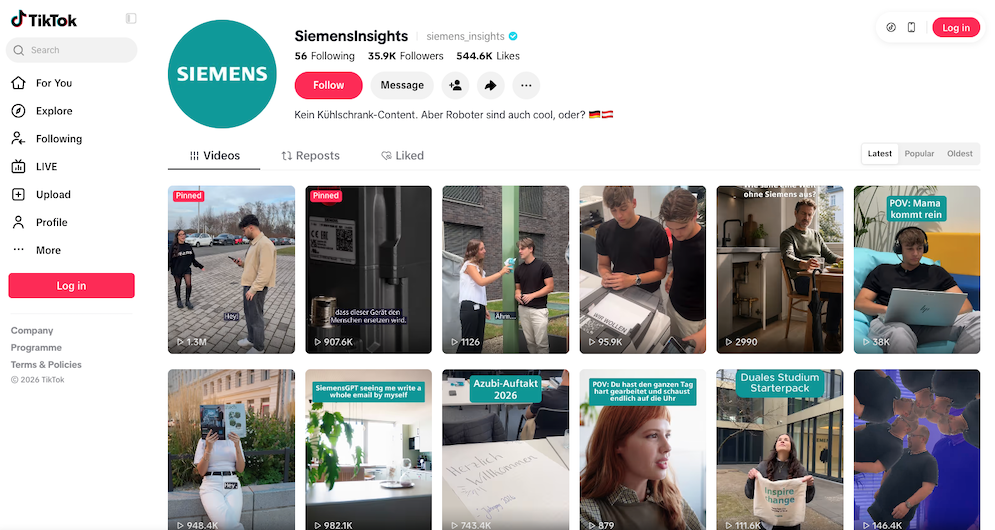
Siemens has taken a similar approach with its careers content. On its @SiemensInsights TikTok channel, apprentices take centre stage, using humour, trends and informal videos to show younger audiences what working at the company is actually like. It's still Siemens talking about careers, but in a way that makes sense for TikTok.
But being platform-native doesn't mean copying whatever happens to be working. If every politician starts filming videos in pubs because Burnham's perform well, it will get old quickly.
The content has to fit the platform, but it also has to fit you.
Do we believe you?
Perhaps that's a more useful way to think about authenticity in corporate social media.
Not: does this look authentic?
Does it make sense coming from you?
Do I believe this CEO would actually say this? Does this joke make sense coming from this organisation? And would we still communicate like this if the format stopped trending tomorrow?
That's what makes Burnham such an interesting case to watch. At the moment, a lot of the sillier content works because the DJing, pubs, music and jokes connect to things we already know about him. But there is a point at which repeatedly demonstrating someone's personality starts to feel like a performance of that personality.
Burnham and his team have shown they know how to get attention on social media. The more interesting question is whether they can keep the balance.
Will Burnham's social media still feel like Burnham a year from now, or will we all be begging him to put the pork scratchings down?