Your suppliers and partners deserve better, and this is why

Why should the digital team take the lead in pushing for a better service for these visitors? Because the company’s reputation can benefit.
-
- Website visitor survey data suggests that suppliers and partners account for up to 11% or more of visitors to corporate websites for some companies.
- 42% of them are looking for company information such as responsibility updates or news.
- Serving these visitors better on the corporate digital channels can boost reputation metrics for a sympathetic but often frustrated audience.
- Bowen Craggs’ new “Supporting suppliers and other partners” benchmarking metric is yielding insights on what good looks like.
Suppliers and partners are coming to your corporate digital channels whether you make a conscious effort to serve them well or not. Still others are turning to AI search tools to try to find out how they can partner with the company or get an invoice paid. Will they feel supported or disappointed by what they find? And should you care?
For the past year or so, Bowen Craggs has been looking closely at the treatment these visitors receive online from the companies listed in the Corporate Digital Communications Index. We have now rolled out a new supplier and partner focussed metric across the whole Index, and the results to date suggest that many companies are not tapping the potential benefits of giving these visitors a good service.
Not so long ago, overstretched corporate digital teams could perhaps claim they had “bigger priorities” and consider themselves absolved of getting involved in this area. But not anymore.
On a scale of zero to 10, just two companies out of the 124 in the Index – Unilever and Siemens – currently hold a score of nine or 10. Almost 50% of the included companies score six or less.
There are legacy reasons for this. In many companies, teams outside the communications function have thoroughly owned supplier and partner relationships. Not so long ago, overstretched corporate digital teams could perhaps claim they had “bigger priorities” and consider themselves absolved of getting involved in this area. But not anymore.
In our modern age, suppliers and the supply chain are part of the nervous system of a company’s reputation (the hit to sales and reputations that US retailers endured from the “diarrhoea lettuce” supply chain debacle this past summer is just the latest and grossest example), while commercial and technical partners have an increasing role in reinforcing trust. Relegating these audiences to a microsite or some other far-flung corner of the internet will send the wrong messages on both transparency and inclusion.
Our checks suggest that such siloed provisions are often neglected, sometimes badly. And as more people turn to AI tools for answers, all such inconsistencies or dead ends will scramble the narrative.
Why these visitors are worth your time
In Bowen Craggs’ website visitor surveys on corporate websites, self-identified suppliers and partners make up about 3% of respondents on average, and for some companies it is much higher – upwards of 10% in some cases.
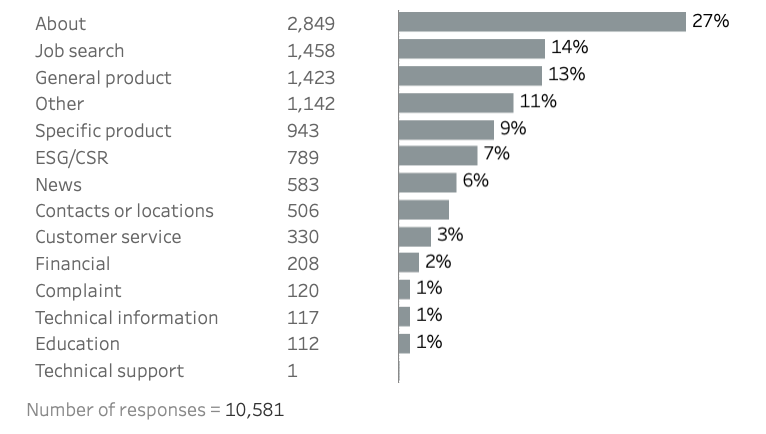
Why they visit is the interesting part: 42% are looking for company and financial information or news. This means the corporate digital channels have a major role in serving these audiences well, which gives the corporate digital team ample justification to push for better provisions for them, across the board.
Why suppliers and other partners visit the corporate website
A case in point: survey data suggests that for one company with a fully separate supplier portal, suppliers and partners make up 11% of visitors to the company’s main website. These are corporate stakeholders who deserve some focussed attention alongside the groups that more typically occupy digital managers’ minds.
Around 14% of supplier and partner survey respondents say they have come to the corporate site to look for a job, which speaks to a bigger truth. These are probably the most fluid of corporate stakeholders. Make them feel welcomed and excited about the company and its partnerships when they visit today and they will go forth with good feelings – and may return later as jobseekers, customers, investors or valued employees. They’ll be natural brand advocates on LinkedIn and in real life in the meantime.
How to keep suppliers and partners happy
Clarity and ease of access are the key thing.
First and foremost, potential suppliers and partners will want practical information, such as contacts, lists of the products and capabilities the company needs right now or details on how to be considered for partnership.
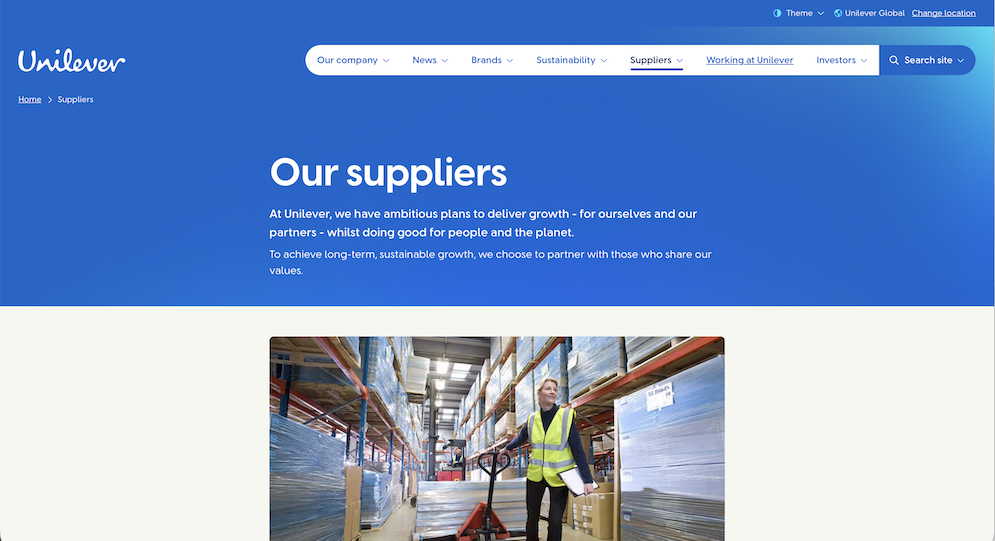
Clarity and ease of access are the key thing. A few companies now include suppliers or partners in the primary navigation on the corporate sites, which is the ultimate visibility. Unilever and Siemens both do this, for example, and have populated their sections with clear and useful information about programmes.
A more common approach is to tuck some supplier responsibility information deep into the “Sustainability” section and call it a day. This well-meaning attempt to signal the importance of suppliers in reputation aims is inadequate when viewed through the eyes of an actual supplier or partner. Consider carving out a more holistic area in the “About” section, similar to Pfizer’s Partnering with Others area, instead.
There will always be more potential suppliers and partners than a company can work with, which means more of their visits than not will end in disappointment – goal not achieved. But even in these cases each visit is an opportunity to clarify, educate and shift these visitors’ neutral or already positive perceptions of the company in an even more positive direction.
One of the best ways to support that outcome is to thread articles, videos and case studies celebrating partner successes into the site and social media channels. The short, invigorating descriptions of past partnerships on Unilever’s Innovate with us page are a good example that should be easy to replicate.
Our hope is that this new benchmarking metric and the well of best practice examples that it is unearthing for Bowen Craggs subscribers can bring higher standards, happier stakeholders and measurably stronger reputation metrics for the teams who decide to push for progress. This is an area where relatively small changes can make a big difference for an enthusiastic but often frustrated audience.
Subscriber resource
If you're a Bowen Craggs subscriber, log in to read an explainer with practice tips and best practice examples to help you improve supplier satisfaction – as well as this audience’s perceptions of the corporate brand and the company’s score in the Corporate Digital Communications Index